


Passive House Builder Nanaimo BC: Real Costs vs. Code-Built Homes
The Question Every Nanaimo Homeowner Asks First
Before almost anything else, the conversation turns to cost. And it's a fair question. When you're working with a passive house builder in Nanaimo, BC, the upfront investment is higher than a code-minimum build — there's no point pretending otherwise. But the real question isn't what does it cost to build? It's what does it cost to own? Those two numbers tell very different stories, especially on Vancouver Island.
At AR Architecture, we've worked with homeowners across Nanaimo and the broader Vancouver Island region who come to us initially skeptical of Passive House. By the time we've walked through the full lifecycle picture together, most of them wonder why they were ever building any other way. This article breaks down what you can realistically expect to spend, save, and gain in resale value when you build to Passive House standard here in BC.
What Does Passive House Construction Actually Cost More in Nanaimo?
Let's start with honest numbers. Passive house construction in Nanaimo and across Vancouver Island typically adds between 5% and 15% to the cost of a code-minimum home, depending on size, complexity, and the design team involved. For a 2,000 sq ft custom home with a base construction cost of roughly $600,000 to $700,000 in the current Nanaimo market, that translates to an additional $30,000 to $105,000.
Where does that premium go? The biggest cost drivers are:
- Enhanced insulation systems — thicker wall assemblies, higher R-values in roofs and slabs
- Triple-pane windows and thermally broken frames — significantly more airtight and better insulating than standard double-pane units
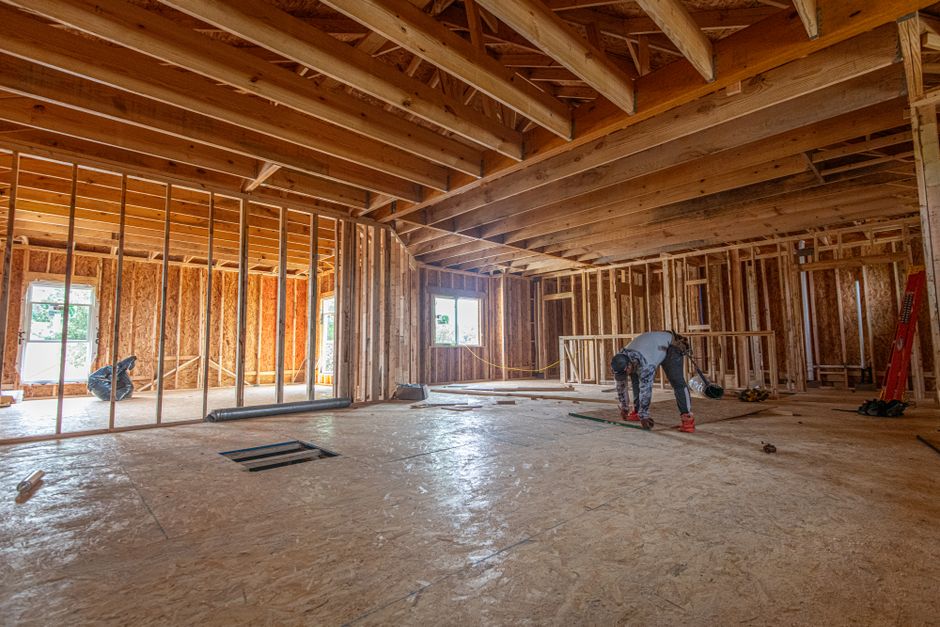
- Airtight home construction in Nanaimo requires meticulous detailing of every penetration and junction, which demands more skilled labour and more time on site
- Heat Recovery Ventilation (HRV) systems — a core component of every Passive House that replaces the need for conventional heating and cooling infrastructure
- Certified design and verification — working with a design team experienced in Passive House modelling and third-party testing
It's worth noting that Passive House homes often eliminate or significantly downsize mechanical heating systems, which offsets a meaningful portion of that premium. When you don't need a $25,000 forced-air furnace and duct system, those savings go back into the envelope.
Why Vancouver Island's Climate Makes Passive House Especially Smart
Here's something that often surprises homeowners: Nanaimo's climate is actually well-suited to making Passive House pencil out faster than in many other Canadian cities. We're not talking about a Prairie deep freeze, but we're also not in the mild Lower Mainland. Nanaimo sits in a temperate coastal zone with wet, cool winters and warm, increasingly dry summers — and that combination creates specific performance advantages.
First, the heating season is long but moderate. A Passive House envelope keeps interior temperatures stable without active heating for a much larger portion of the year. Second, summer overheating is a growing concern on Vancouver Island as climate patterns shift. A well-designed Passive House — with proper solar shading, thermal mass, and an airtight envelope — stays cooler naturally without air conditioning. That's a genuine quality-of-life gain that a code-minimum home simply can't match without significant mechanical intervention.
Our blog post on passive solar home design for BC and Vancouver Island explores how orientation, glazing ratios, and shading strategies work together with a high-performance envelope — principles that overlap closely with Passive House design thinking.
Third, the high humidity of coastal BC makes airtightness more than a comfort feature — it's a durability feature. Moisture-driven damage to wall assemblies is one of the most expensive long-term problems in BC construction. A rigorously airtight home, built with a proper vapour management strategy, dramatically reduces that risk and extends the life of the building.
The Long-Term Energy Savings Calculation
A certified Passive House uses roughly 60% to 90% less heating energy than a code-built home. In practical terms, what does that mean for a Nanaimo family?
A typical code-minimum home in Nanaimo might spend $2,000 to $3,500 per year on space heating and cooling depending on fuel source and home size. A certified Passive House in the same climate, same size, might spend $200 to $600 annually — sometimes less. With BC Hydro rates rising and the federal carbon price continuing to increase the cost of fossil fuel heating, the gap widens every year.
Run a conservative 25-year projection:
- Code-built home: $2,500/year average energy cost × 25 years = $62,500
- Passive House: $400/year average energy cost × 25 years = $10,000
- Estimated savings: $52,500 over 25 years (not accounting for rate increases)
Factor in BC Hydro's projected rate trajectory and the phasing out of natural gas in new construction under BC's energy step code pathway, and that savings figure grows substantially. For many homeowners, the energy savings alone recover a significant portion of the construction premium within the first 15 to 20 years — before accounting for resale value at all.
Resale Value and Market Positioning in BC
The BC real estate market is beginning to price energy performance into home valuations in a meaningful way. Energy-efficient home builders in BC are seeing increasing buyer demand for EnerGuide ratings, Step Code compliance documentation, and Passive House certification — particularly among younger buyers and those relocating from urban centres where high-performance buildings are more normalized.
Studies from comparable markets in Germany and Scandinavia — where Passive House has been mainstream for decades — show certified homes selling for 5% to 10% above equivalent non-certified homes. BC appraisers are beginning to incorporate energy ratings more formally into valuations, and lenders including major chartered banks now offer green mortgage products at preferential rates for certified high-performance homes.
The takeaway: your Passive House is likely to appraise higher, sell faster, and attract better-qualified buyers when the time comes. That's not a speculative benefit — it's a structural market shift already underway.
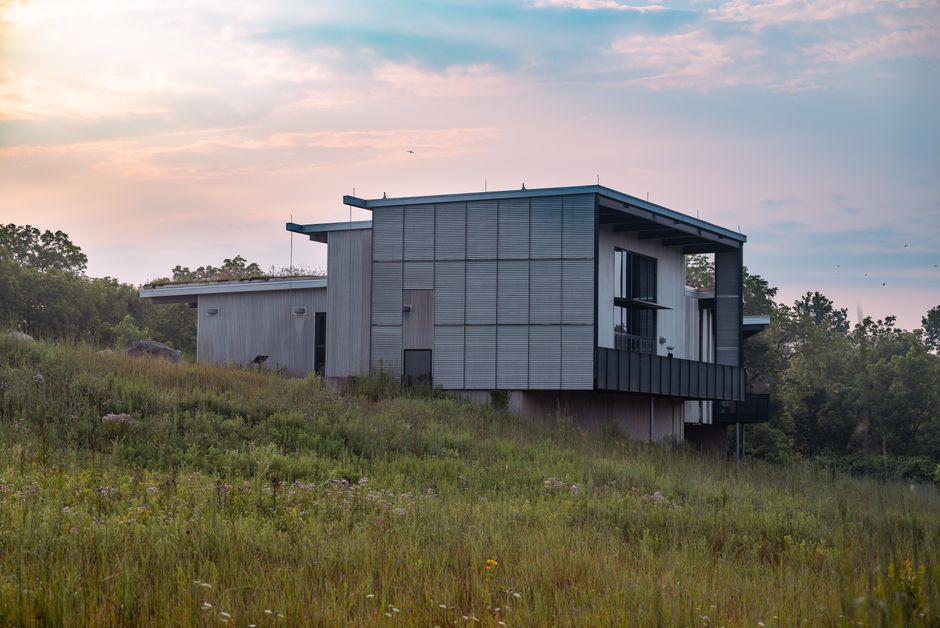
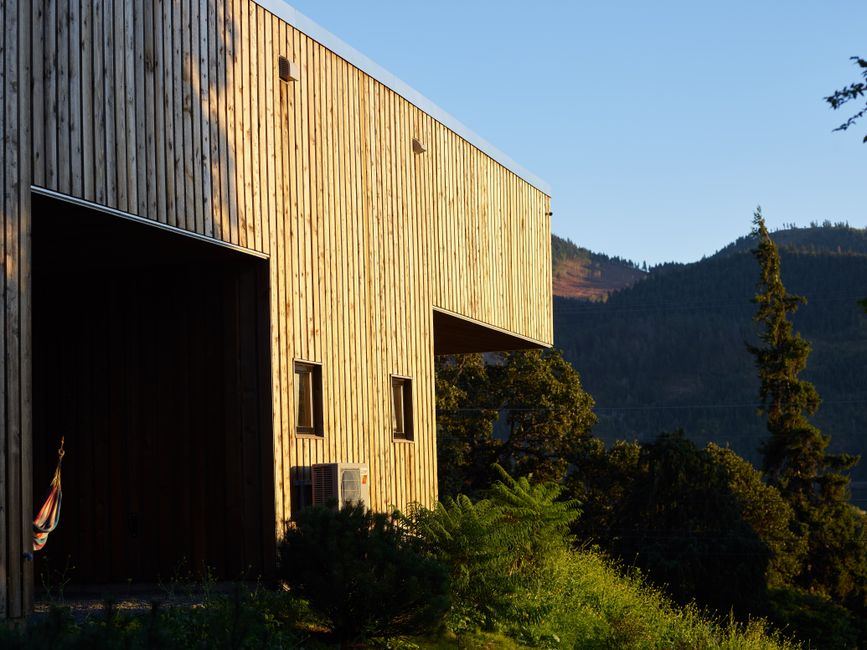
If you're curious about what thoughtful, high-performance residential design looks like in practice, our Lantzville Road project is a good example of how design rigour and performance thinking come together in a Vancouver Island context.
Incentives That Reduce the Gap Right Now
Federal and provincial incentive programs make the upfront premium more manageable than many homeowners realize. The Canada Greener Homes Grant and associated loan programs have offered up to $40,000 in interest-free financing for energy retrofits, with new construction incentive streams continuing to evolve. BC Hydro's PowerSmart programs and CleanBC rebates add further layers of support for homeowners building to low energy home design standards in BC.
Working with an architect experienced in Passive House and sustainable architecture in Nanaimo and across BC means you'll have someone who can help you navigate which incentive programs apply to your specific project and timeline — and design to maximize your eligibility from the start.
Building Passive House in Nanaimo: Is It Right for Your Project?
Passive House isn't the right fit for every project or every budget, and we'll always tell you that honestly. But for homeowners planning to stay in their home for 10 or more years, who value comfort, air quality, durability, and long-term financial performance, the math is compelling — especially in Nanaimo's coastal climate.
The key is getting the design right from the beginning. Passive House performance is largely determined in the early schematic phases: orientation, massing, window placement, and envelope strategy. Retrofitting these decisions later is expensive. Starting with an experienced team is where the real value is captured.
If you're exploring what Passive House could look like for your home or project in Nanaimo or anywhere on Vancouver Island, we'd love to have that conversation. Reach out to AR Architecture to talk through your goals, your site, and what a high-performance home could mean for your family — both now and decades from now.
Details
Author







.jpg)